On September 23, 2025, in Hanoi, Green Climate Innovation Company Limited (GreenCIC), as the lead consultant under the Technical Assistance “Impact Assessment of the Emissions Trading System and Carbon Credits in Viet Nam” collaborated with the Department of Climate Change (DCC), Ministry of Agriculture and Environment, and the Southeast Asia Energy Transition Partnership (ETP) to organize the Final Workshop on “Impact Assessment of the Emissions Trading System and Carbon Credits in Viet Nam”. The event brought together representatives from state management agencies, domestic and international experts, and research organizations to share technical assistance outcomes, international experiences, and discuss future directions for Vietnam’s carbon market development.
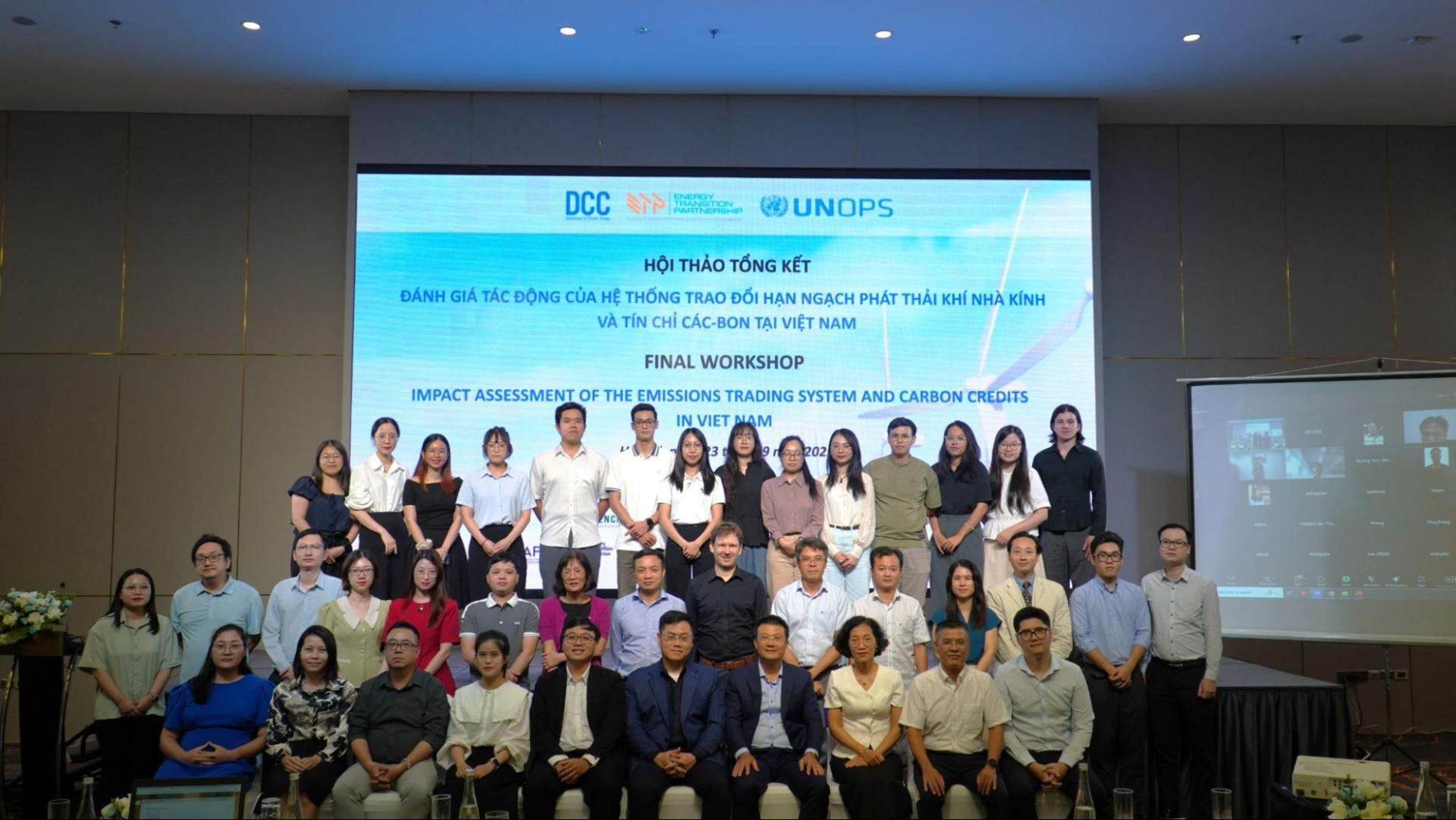 Participants at the workshop
In his opening remarks, Dr. Nguyen Tuan Quang, Deputy Director General of the Department of Climate Change, Ministry of Agriculture and Environment, emphasized that globally, ETS and other carbon pricing instruments, such as carbon taxes, are becoming effective policy tools for emission reduction and implementation of the Paris Agreement. According to the World Bank, by 2025, there were 37 ETSs worldwide, covering 23% of global emissions and generating US$69.1 billion in revenue. Vietnam is also gradually establishing its ETS framework to fulfill its NDC and Net Zero 2050 commitments, supported by the Environmental Protection Law, Decree 06/2022, and Decree 119/2025, with a pilot phase until 2028 and official operation from 2029. He stressed that this workshop provides an opportunity to summarize the technical assistance outcomes and gather policy recommendations and international lessons to prepare for the upcoming pilot phase.
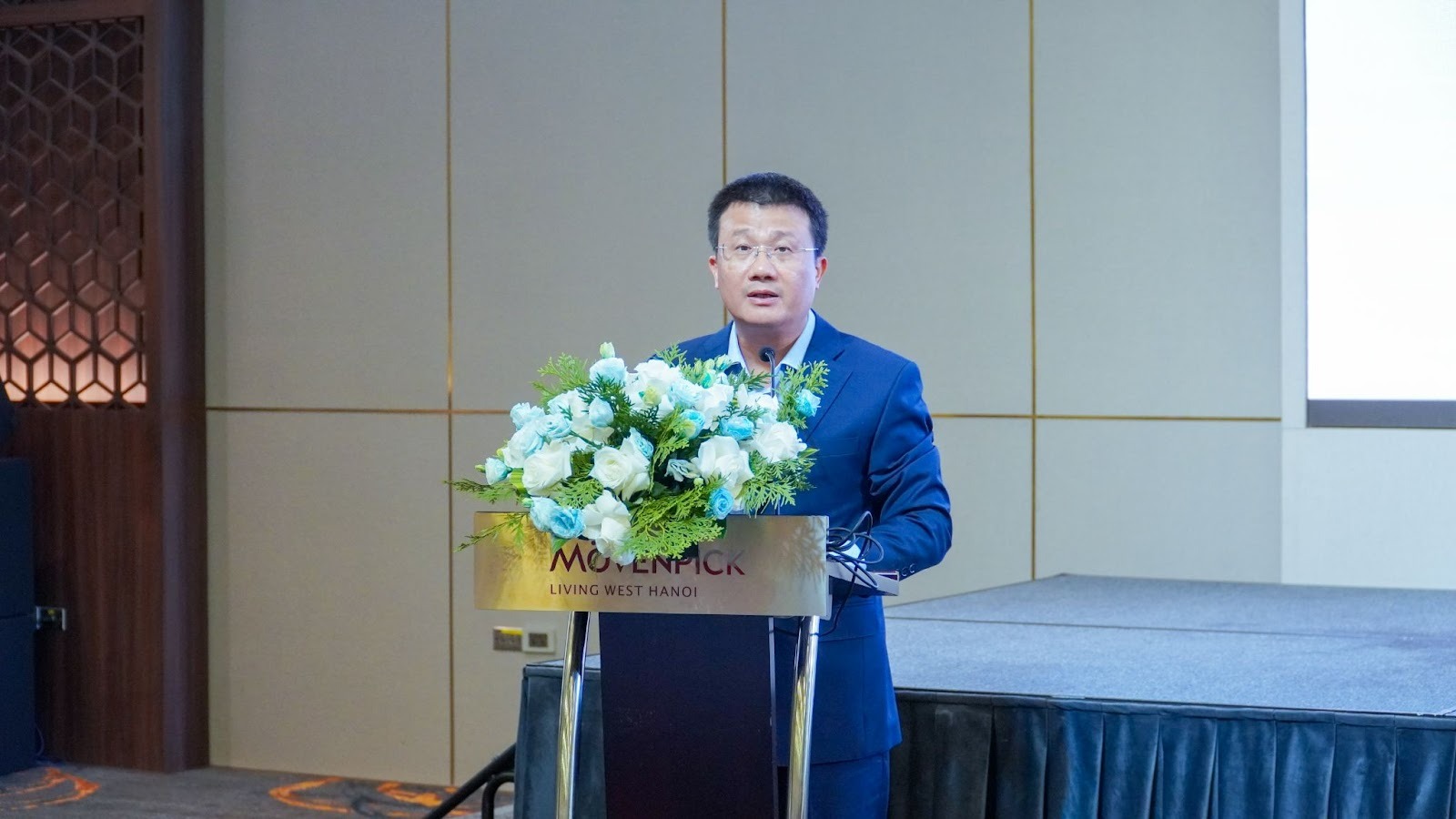 Dr. Nguyen Tuan Quang, Deputy Director General of the Department of Climate Change, Ministry of Agriculture and Environment
Mr. Pham Nam Hung, representative of the Department of Climate Change – Ministry of Agriculture and Environment, presented an overview of the policy framework and roadmap for Vietnam’s carbon market development. His presentation introduced the fundamental concepts of the carbon market, its objectives and significance in greenhouse gas mitigation, and reviewed the existing legal framework, including the 2020 Environmental Protection Law, Decree 06/2022, and Decree 119/2025. He noted that the market’s roadmap includes a pilot phase from 2025 to 2028, followed by full operation after 2030, with key management tools such as emission allowances, carbon credits, domestic trading platforms, and cooperation mechanisms under Article 6 of the Paris Agreement.
 Mr. Pham Nam Hung, representative of the Department of Climate Change – Ministry of Agriculture and Environment
Ms. Nguyen Hong Loan, Lead Consultant/Climate Policy Expert and Director of GreenCIC, together with Mr. Ho Cong Hoa, Impact Assessment Expert from the Academy of Policy and Development, presented the outcomes of the technical assistance implemented from September 2024 to September 2025.
The results focused on analyzing the interactions between domestic ETS management options and international carbon credit trading mechanisms. The research team simulated multiple scenarios, ranging from system scope, allowance allocation methods, to the permissible level of offset credit use, and assessed their socio-economic impacts, including compliance costs, effects on GDP and household consumption, and potential international revenue. The policy recommendations emphasized balancing economic benefits with environmental integrity, and the need to strengthen institutional capacity to ensure effective and transparent market operation.
 Ms. Nguyen Hong Loan, Lead Consultant/Climate Policy Expert and Director of GreenCIC
 Mr. Ho Cong Hoa, Impact Assessment Expert from the Academy of Policy and Development
In the next session, Dr. Robert Ritz, Economist at the University of Cambridge, shared international experiences on ETS design and governance. He presented a global outlook on carbon pricing toward 2030, projecting that carbon prices are likely to double and more ETSs and carbon border adjustment mechanisms (CBAMs) will emerge. For Vietnam, Dr. Ritz recommended close monitoring of factors such as price floor and ceiling mechanisms, sectoral coverage, allocation methods, and the use of auction revenues to support green transition efforts. He also advised Vietnam to prepare for the impacts of the EU’s CBAM and consider developing a similar regional mechanism to protect industrial competitiveness.
Ms. Marianne Tan, Deputy Director for Policy and Strategy in the Asia-Pacific region at South Pole, concluded the thematic presentations by sharing international experience and next steps for managing carbon credit transactions. She emphasized the crucial role of host countries under Article 6 of the Paris Agreement, noting that governments should focus on four key responsibilities: establishing clear institutions, defining national priorities, developing transparent approval processes, and setting up the required technical and infrastructure systems. She added that an effective operational framework must also ensure fair benefit-sharing, a well-connected national registry, and robust monitoring and reporting capacities to build trust among international partners.
In his closing remarks, Mr. Do Manh Toan, National Coordinator of ETP, highlighted the significant outcomes achieved after nearly one year of implementation, focusing on two key areas: assessing the impacts of Vietnam’s domestic carbon market and analyzing options for international carbon credit transactions. He noted that the technical assistance had delivered three key values: providing scientific and quantitative evidence for policy making, helping Vietnam identify opportunities and challenges in the global carbon credit market, and enhancing the capacity and participation of stakeholders. He reaffirmed the Department of Climate Change’s pivotal role in ensuring the program’s success and confirmed that ETP will continue to collaborate closely with the Ministry of Agriculture and Environment in the next phase, supporting further research, legal framework development, capacity building for enterprises, and international cooperation, to help Vietnam achieve its Net Zero 2050 target.
 Mr. Do Manh Toan, National Coordinator of ETP
The workshop concluded with an engaging open discussion, where participants agreed on the need to strengthen the legal framework further, improve infrastructure, and enhance management capacity to enable Vietnam’s deeper integration into the international carbon market. The outcomes of this Technical Assistance reaffirm Vietnam’s strong potential to both effectively reduce emissions and attract green financial resources, contributing to the realization of its Net Zero 2050 commitment.